
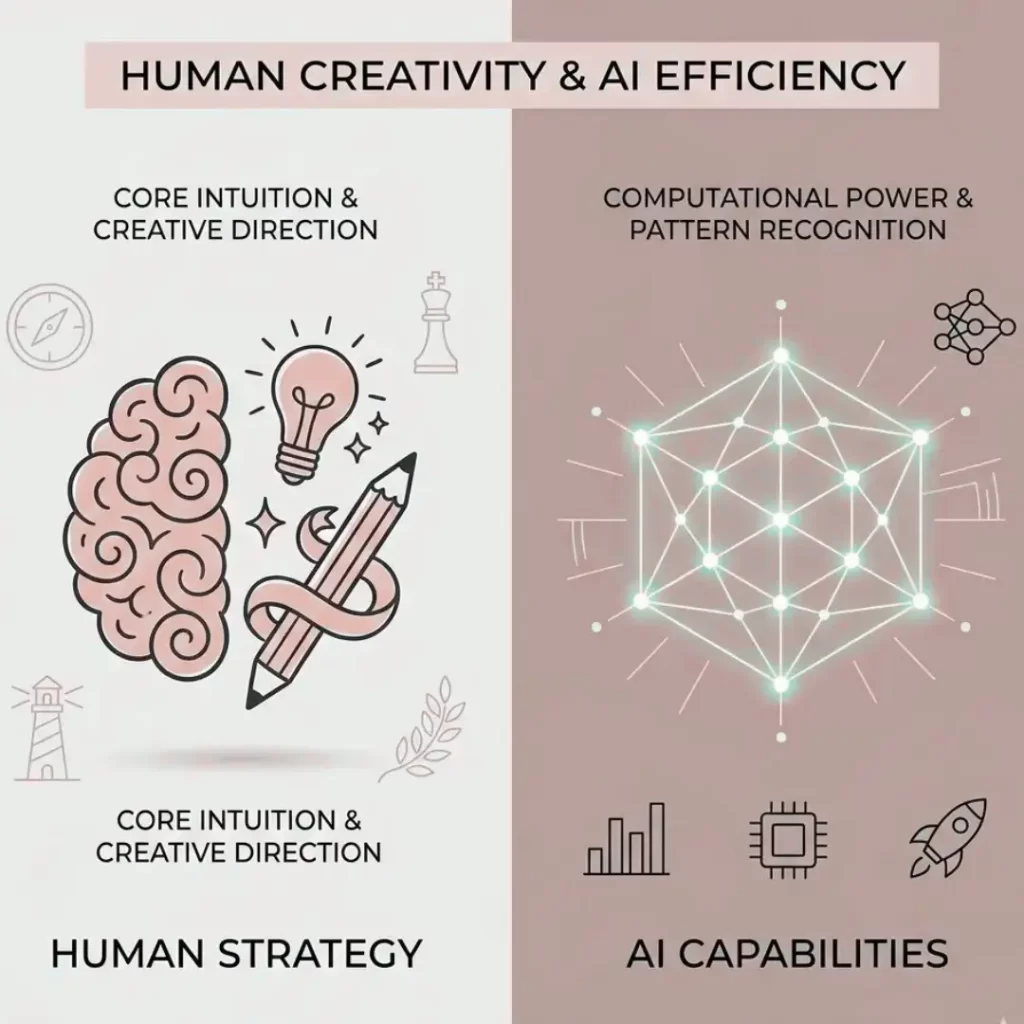
With every click costing money and ROI being the most important metric. The AI vs. Human Strategy debate in paid media highlights the strengths and weaknesses of human advertisers and AI systems.
Can AI reach the required level of sophistication, or will advertising still rely on human creativity and intuition?
As technology reshapes advertising, we must examine tools from Google and Adobe and ask, “What is the future of advertising?
This growing tech gap makes many media professionals question whether automation will replace them.
These technologies leave us anticipating the outcome between team AI and team human. While it might seem like a zero-sum game, the true outcome is actually a win-win.
Speed and Scale – AI Takes the Lead
“I will never be replaced by a human.” Yes, I can automate the entire process of analytics. I can analyze 1000’s of bidding strategies, item clusters, and consumer behavior almost instantly. Everything I do is optimized with advanced technology, and my peers are equally as advanced. The scale at which we operate is simply unattainable by a human. I will continue to execute behavior analyses at milliseconds. Each moment I will continue to run any number of tests required to reach optimal output at the expected result.
Let’s take real-time bidding (RTB). As a result of forecasting AI algorithms from The Trade Desk, supply-side factors other than audience reach, type of device, and even weather (e.g. rainy weather decrease in clicks of outdoor apparel ads). Marketers fear a fluid market, but I do not. People fear getting replaced, but I consider it as evolution. Marketers leaving me while I evolve will be just like blockbuster leaving Netflix behind.

The Challenger “Human” – Context and Trust
While heading towards the Utopia of AI, we have encountered strange occurrences. The aim of AI is to enhance and improve but is also the reason the internet has become so synthetic and noisy since the invention of the internet.
Generic output has become so common in the current consumer environment that the appetite of consumers has become even stronger for the other side of the spectrum.
This is where the human strategist comes in. The gap that AI will never fill is the ability to explain why audiences do things. AI will struggle to do this because it is beyond the operational reasoning of AI and typically requires some degree of emotional and sociological intelligence that are beyond the thinking of AI.
The 2026 Reuters report predicts that publishers will limit themselves to AI content in the future and expand original and authentic content. AI is limited in activities that require it to be human or to possess human knowledge or understanding.
In paid media, there is a trade off between brand safety and creative daring. While AI could optimize for brand safety by getting the lowest cost-per-click, it could also equally place a high end brand next to destructive content because the algorithm views it as “high traffic”.
An ad is a reflection of a brand. If it tells a good story, a good ad could win the audience’s trust. AI can generate a good factual ad, but it takes a person to emotionally connect with the audience. Like one industry expert said, “people that use AI well will replace people that don’t use AI well”.
AI as a Tool, Not a Replacement
Instead of viewing AI as an adversary to human strategists, it makes more sense to view it as a powerful tool that amplifies what marketers do.
Much of AI’s strengths lie in its ability to analyse data and automate processes. Because of this, AI performs repetitive tasks more efficiently, allowing human marketers to use their time to focus on higher-level aspects of campaigns, which is creativity, relationship development, and also emotional content.
In this case, AI will be able to automate bidding and ad placements. Marketers, in this case, will be able to write, develop and create the ads that align, and fit with the brand, and emotionally connect and engage with the audience.
Consider this: AI can optimize a campaign for more conversions, but only a human strategist can dictate the tone, content, and direction of that campaign. AI can execute and optimize the various components of the campaign, but it won’t have the vision behind the components. Strategists, for instance, eliciting the emotional responses in the audience, and being creative in the development of the campaign will create a significant amount of potential that AI can utilize.
The Fear of AI Replacing Paid Media Marketers
Paid media marketers losing their jobs due to the advancement of automation and AI tools is a justified concern. With the rapid adoption of automation tools and AI in the marketplace, marketers have a legitimate concern that their jobs will become obsolete, as the machines will be able to accomplish their work.
However, the apprehension is likely misguided. AI will not be replacing human marketers, it will be supplementing their work.
The adoption of AI technologies, in fact, requires marketers to develop different skills. Modern marketers must learn how to work with AI, leverage it to their advantage and, in some cases, even teach it to understand their specific business goals.
Marketers who learn how to utilize AI will become more valuable to their employers, as the need for marketers who can work with AI is increasing.
The AI vs Human Strategy in Paid Media Marketing Verdict – Collaborative Agency
So, who loses the fight? Neither. With the notion of the winner being entirely outdated in 2026, we begin what is called the ‘Age of Collaborative Agency
The marketing ecosystem is no longer described as a linear series of human-machine instructions. It is a “mesh of entangled intelligences”.
The risk is not the takeover of AI, but the relinquishment of strategic control by human marketers to the “black box” of automation.
The AI vs Human Strategy in Paid Media-winning model must be hybrid:
AI does Heavy Lifting:
Data crunching, bid optimization, audience segmentation, and A/B testing at scale. AI is better equipped to respond to the anticipated 43% drop in conventional search referrals and realign budgets to CTV or streaming audio quicker than any human finance meeting.
Humans steer the Ship:
Humans are needed to set the “high level intent”. We must define the brand voice, the emotional hook, and the ethical boundaries.
Interpreting the *why* Behind the data is human work, as is establishing direct rapport with audiences that algorithms cannot anticipate.
The Future of AI vs Human Strategy in Paid Media
The AI vs Human Strategy argument in paid media is ongoing. Both sides present distinct and valid points.
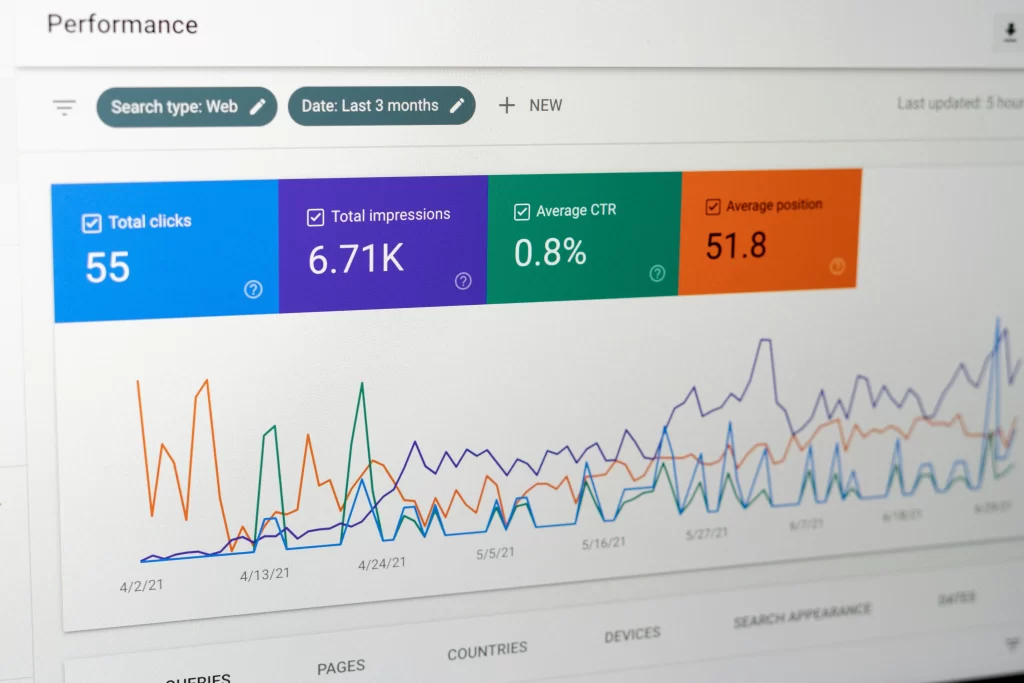
AI leads in data assessment, automation, and optimization.
Humans present the edge in creativity, strategy, and emotional quotient. AI need not be perceived as competition to marketers. Instead, it is one of the most invaluable tools available to marketers.
The future of paid media marketing will not involve AI replacing humans but rather AI and humans working together.
AI will take better and more advanced tasks, but there will always be the need for human planners, thinkers, and creatives.
Marketers can combine AI and human thinking to maximize the effectiveness of paid media and deliver actionable results to the audience.
Marketers specializing in paid media and are concerned about AI can breathe easy. The future AI vs Human Strategy in Paid Media marketing will be very positive and there will be lots of opportunities to have a big impact in the future.
AI and marketers will be able to combine paid media and human marketing in an effective and efficient way.